Hello, dear readers.
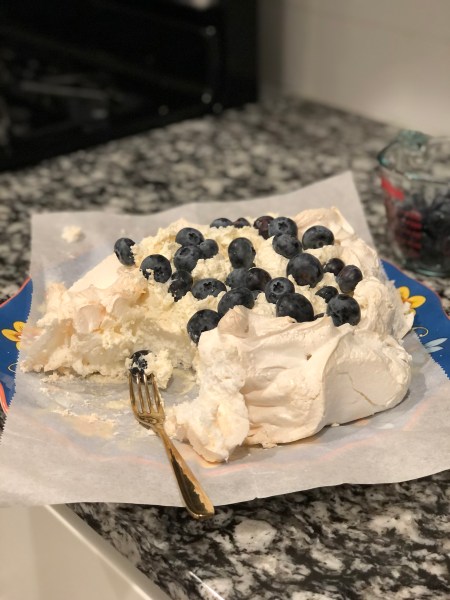
This week, I tackled something sweet and delicious– the blueberry pavlova.
I’ve never eaten pavlova before and had no idea what it would taste like or feel like in terms of consistency. In all the photos I had seen, it looked like a cloud of delicious mystery.
For those who didn’t know (like myself), the pavlova is a dish that was first spotted in Australia and New Zealand in the early 1920’s. The “pavlova” is likely named after Russian ballerina Anna Pavlova, who was touring in the country at that time. It is a light dessert that has a brittle crust, and is usually topped with whipped cream and fruit.
The one we will be making today will be topped with blueberries.
The ingredients needed are below:
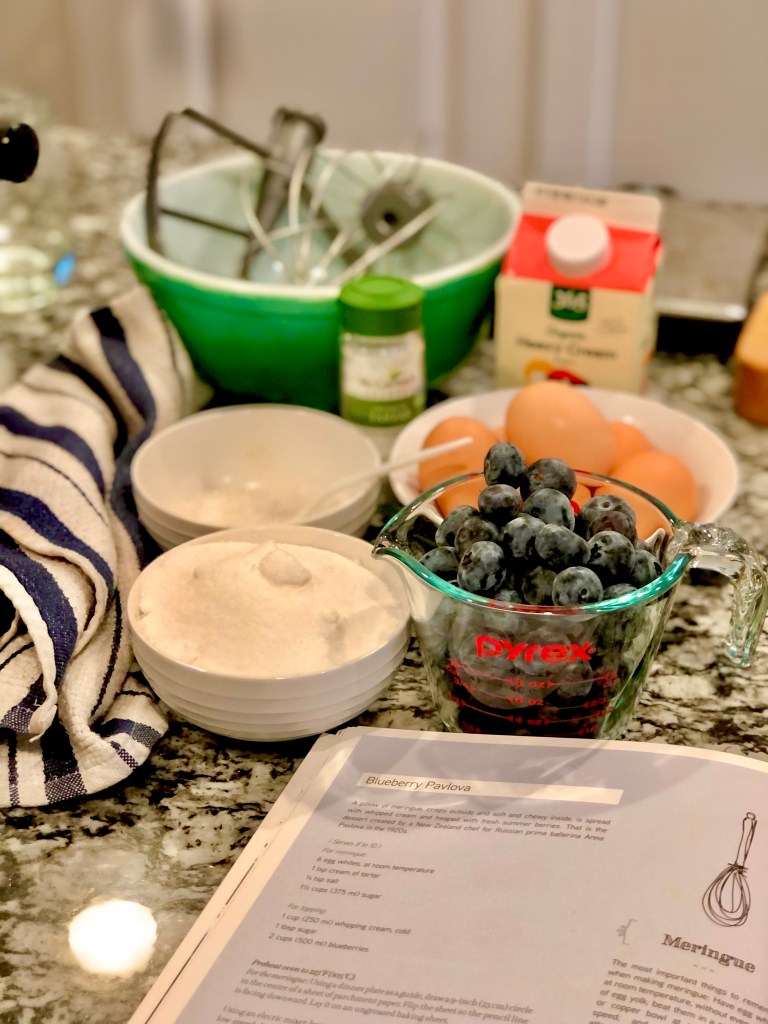
Now, pavlova is basically baked meringue.
In turn, meringue is whipped egg whites, with sugar and cream of tartar, until you get “stiff peaks”. I remember seeing meringue everywhere, from cooking shows to fancy pastry shops, and thinking “that must be a headache of a recipe.”
I have since changed my mind.
Meringue is actually very easy to make. The key? Room Temperature Eggs. And I mean it, people. Take your eggs out at half an hour before starting the process. If your eggs are fresh out of fridge, you will fail. (If you’re unsure of what “Room Temperature” actually is– it is between 65-75 degrees Fahrenheit.)
I learned this the hard way.
It was early evening; Alex was beginning to prepare dinner and I was feeling quite impatient, even though Susan Semenac, the author of the recipe, clearly outlined the singular requirement.
What ended up happening?
I dumped the egg whites into the food processor, put it on medium low speed, and waited.
And waited.
And waited.
And then nothing– it was just liquid egg whites. How could this be?!
I finally surrendered and let the egg whites reach room temperature.
Guess what: it worked!
Another change I made (which Alex recommended) was to increase the speed. Medium-low will not get you there.
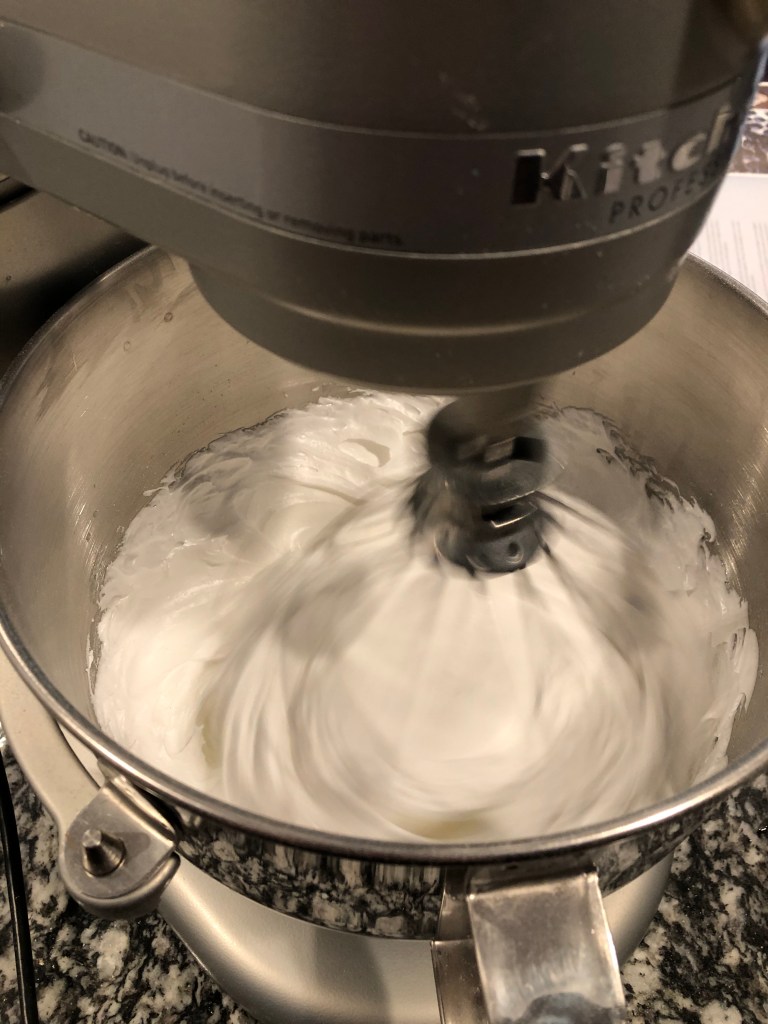
I got very excited when I achieved the famous “stiff peaks”:

Once you get this result (and after you do your victory dance), shape the beautiful meringue into a circular mound on a baking sheet. Make sure to dig a little pocket in the middle, like so:
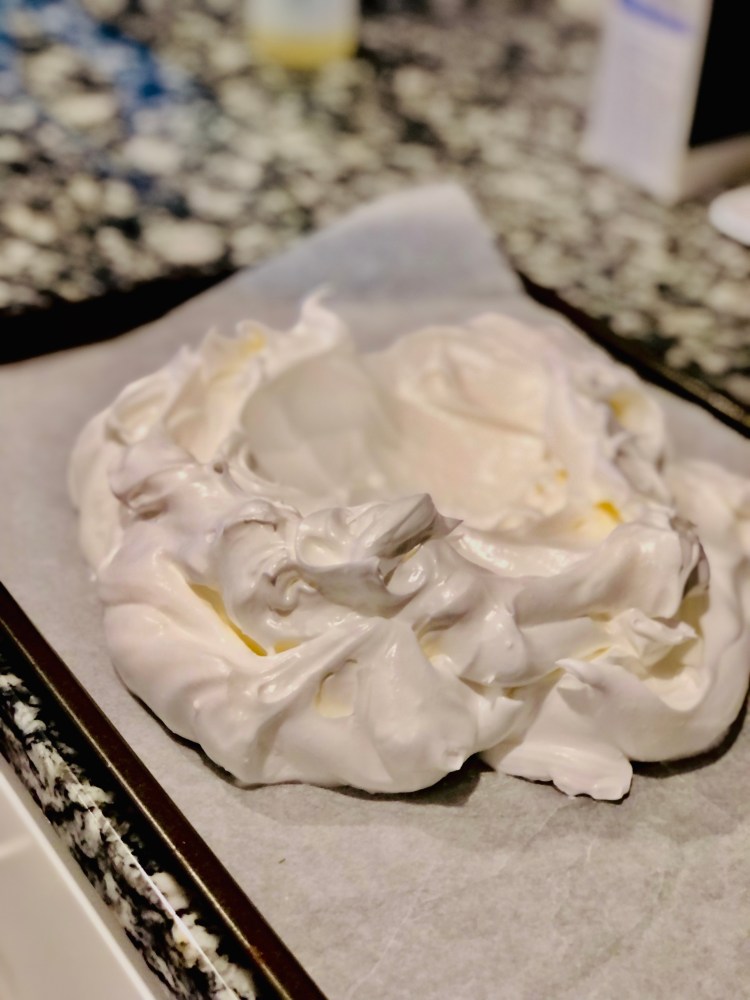
You then will bake it at a low temperature, around 225 degrees Fahrenheit, for 1 hour or until you see a light crispiness and browning.
Once out of the oven, it will look like this:

Once cooled, you can add the whipped cream and fruits!
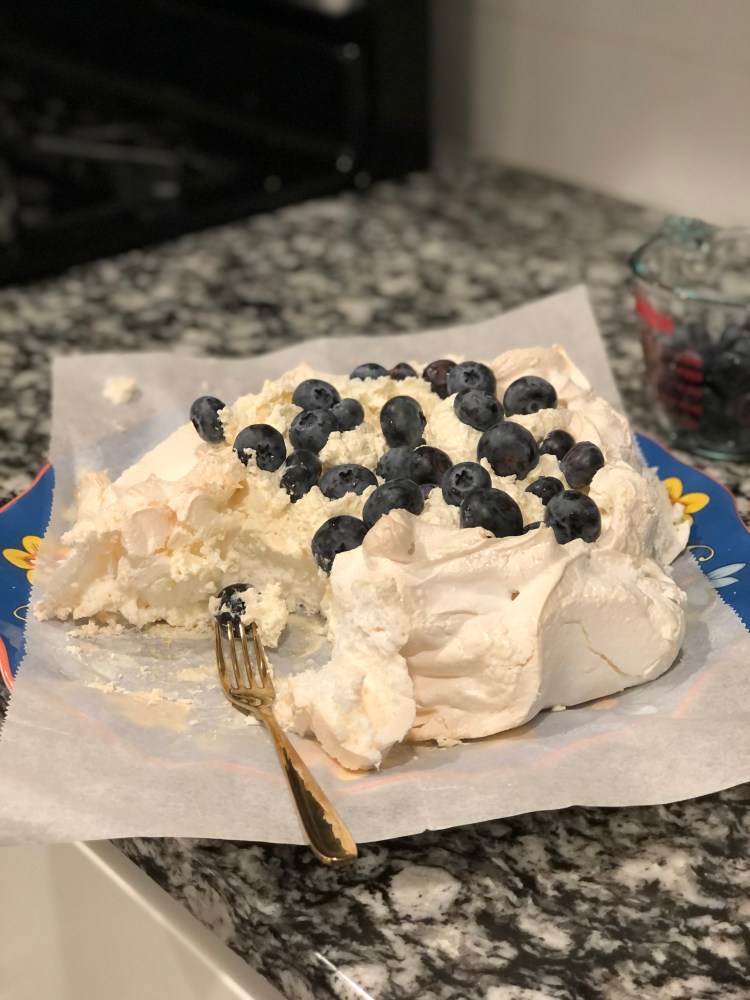
I say this without trace of exaggeration: this dessert is exceedingly sweet and amazing.
Can you recall the taste and consistency of cotton candy? How you feel the crisp, sweet sugar melt on your tongue? Combine this subtle crisp with a fluffy internal texture equal to marshmallow fluff, and whapow! You have pavlova.
The whipped cream and fresh fruit adds layers of flavor to the otherwise tasteless crunch.
What makes this ideal for summer is the weightless, cloud-like sweetness which can be paired with fruits of the season– peaches, blueberries, strawberries… the possibilities are endless!
I think the recipe itself is, for the most part, accurate.
The one criticism I have is in regards to the times allocated for the baking: while recipe says 45 minutes, the meringue was still very soft and rubbery at that point. I would replace it with at least 1 hour as mentioned above.
I hope you enjoyed this post and can learn from my mistakes!
Have a wonderful rest of your weekend, friends, and much love.

 Evelyne's Cozy Corner