Squashin’ It: Cozy Fall Ravioli

Dearest Readers,

Welcome back into my cozy kitchen! I hope you’ve all been well (and safe, especially) and that you’re finding time to enjoy the new season. I’m thrilled Summer is over and “sweater weather” can now commence as the colder temperatures roll in. As you might have guessed, I’m NOT a hot weather girlie. I’m more of a clouds, rain, and misty forest bog lady.

We just settled into a new home and a new job, and while all of that has been quite disorienting, taking the time to cook a comforting meal has worked wonders in soothing my worries and stress. This recipe is honestly right off the cuff, minus the dough recipe which I will link below. Butternut squash is the quintessential Fall ingredient, and I really wanted to lean into its sweetness by pairing it with mushrooms and pork sausage. Obviously, I think this dish would taste great even without pork for my vegetarian readers. The key, primarily, was honoring the butternut’s natural sweetness and nuttiness and the good news is anything can be ravioli. So, if you want to recreate this recipe I encourage you to let creativity and taste buds take the wheel ❤️ These are the main ingredients I used:

As you can see, our new kitchen has very little counter space. Frustrating and makes me want to scream, but it teaches me hard lessons like being better at planning.

🌈🦄positive thinking🦄🌈

While I cubed up one whole butternut squash, I preheated the oven to 400 degrees. The plan was to let it get as caramelized, crunchy, and sweet as it can possibly get. Once cubed, I placed it all on a baking sheet and added 2-3 Tbs of water and 1 Tbs of olive oil. I let it bake for about 30 minutes, and then tossed them in about 1 Tbs of honey. This would facilitate caramelization. Afterwards, I let it broil on low for another 15 minutes.

Mind you, these times will vary based on the temperament of your oven. Each one is different! So keep your eyes on it especially while it’s broiling.

And Voilà. You can definitely get them crunchier, but this is where I decided to stop. After cooling, I added the butternut to the blender with about 1/2 cup of cubed Gruyère cheese, a pinch of salt and a pinch of coriander (in the absence of nutmeg). This really brought out the flavors I wanted. The filling ended up tasting sweet, smooth, and nutty, but at the same time a little tangy and savory because of the cheese. Perfection.

The next part was my least and favorite. I know that’s a contradiction, but just… bear with me. The pasta dough. The recipe I used is the following from the Food Network:

https://www.foodnetwork.com/recipes/tyler-florence/ravioli-dough-recipe-1938192

I added flour, eggs, and salt to mixer on medium low. As that was blending, I added a thin line of olive oil until the dough formed into clean a ball like so:
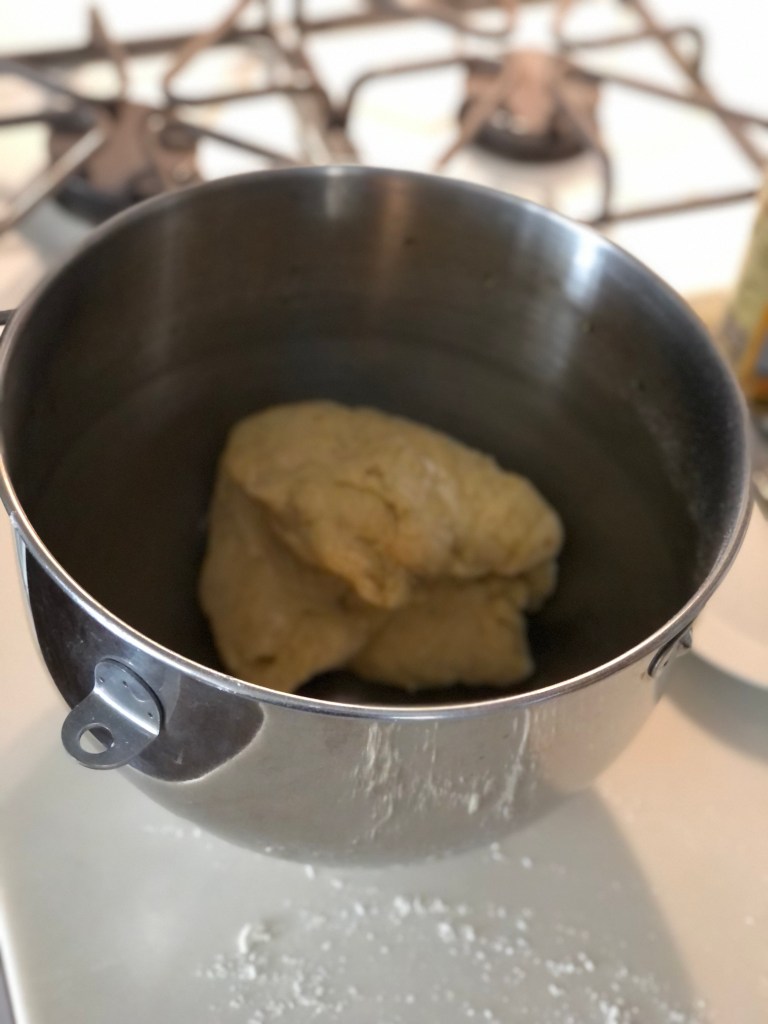
Now, this is the part I like the least- the kneading- as you “knead” some upper body strength for this one. Lol, I’m hilarious.

But seriously, knead the dough for about 10-15 minutes until it is smooth and elastic. This will build up gluten and allow for the dough to stretch. My ball looked like this:
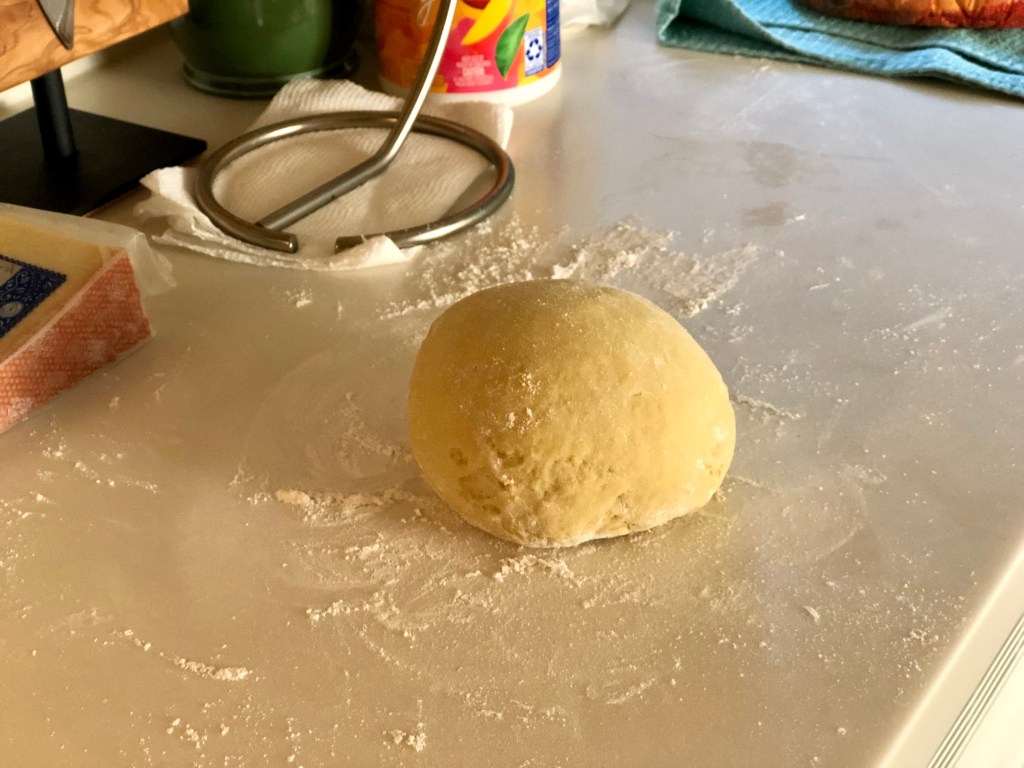
I wrapped my dough in plastic wrap and let it rest 30 minutes on the counter. After setting a timer, I started working on the sauce for the ravioli. This included some sautéed breakfast sausage and mushrooms. I started with the sausage, because that lined the pan with oil that is used to sauté the mushrooms. It’s not the most elegant looking topping, but the flavor pairing turned out amazing. Alex wrapped up the details of the sauce by adding thyme and butter, and I finished the ravioli. No salt was needed because the sausage already provided that.
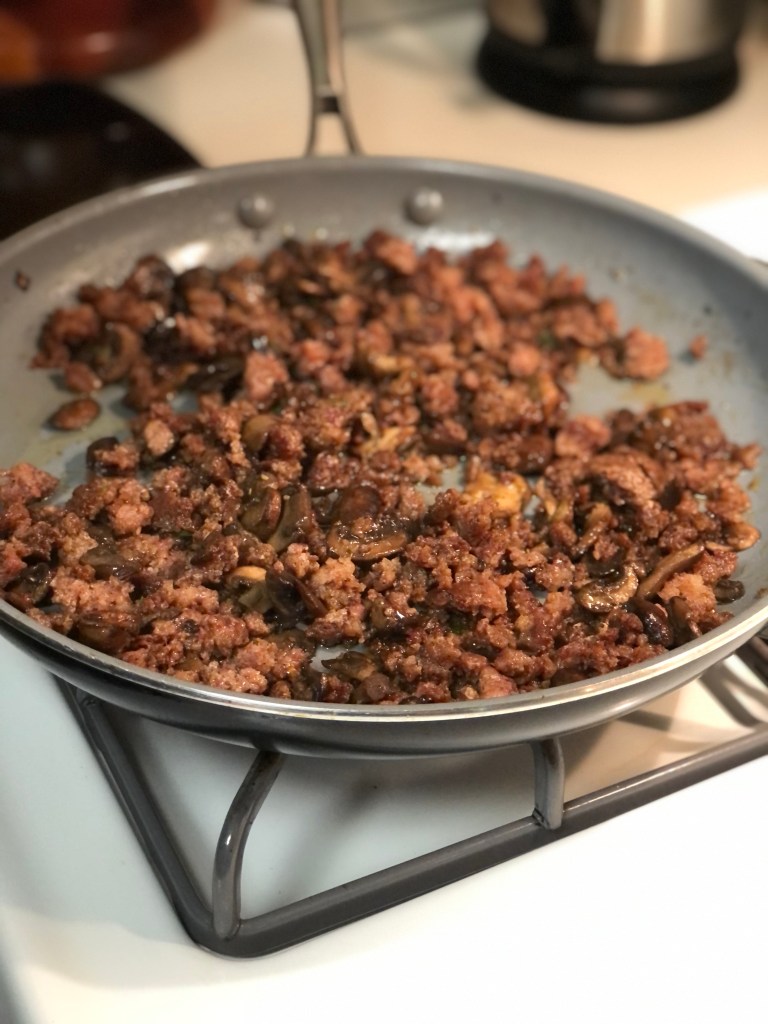
My favorite part of the “dough” process was using the pasta roller. I have a Kitchen-aid attachment for it, and as you pass the chunky dough through the rollers, it comes out thin, smooth and velvety on the other end. You end up with long stretchy strips of thin pasta dough upon which you add dollops of about 1/2 Tbs of filling, like so:
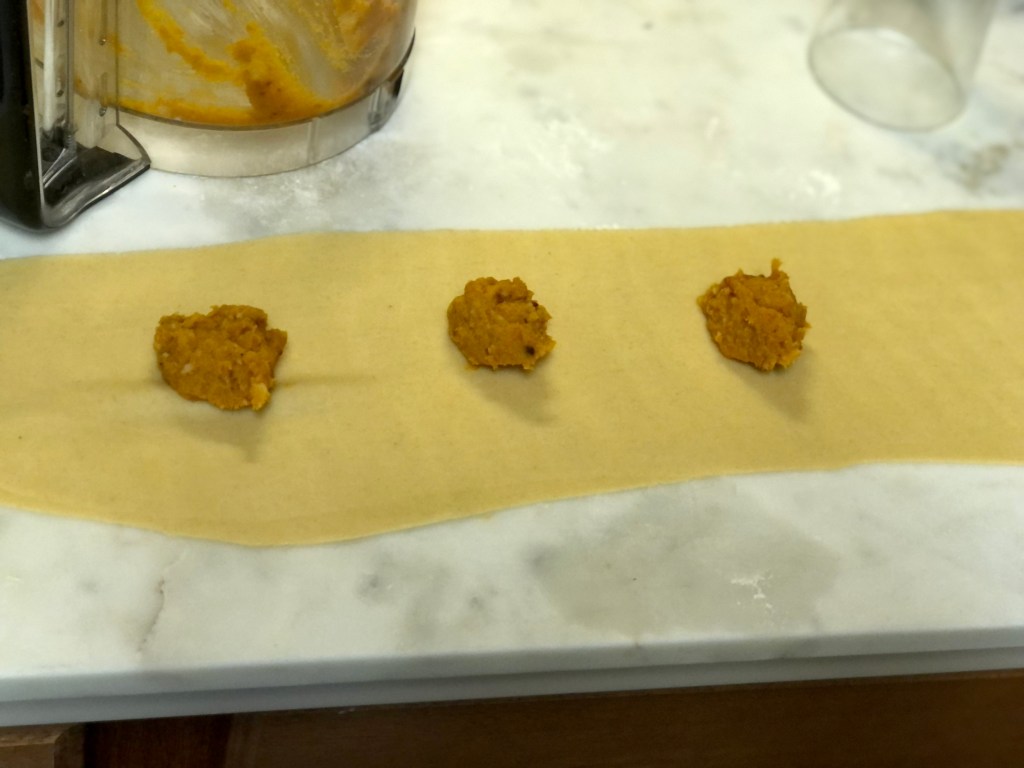
Place one strip on top of the other, and use whatever instrument you prefer to shape the ravioli. Personally, I used a glass because I don’t know where my ravioli press ended up in this house.

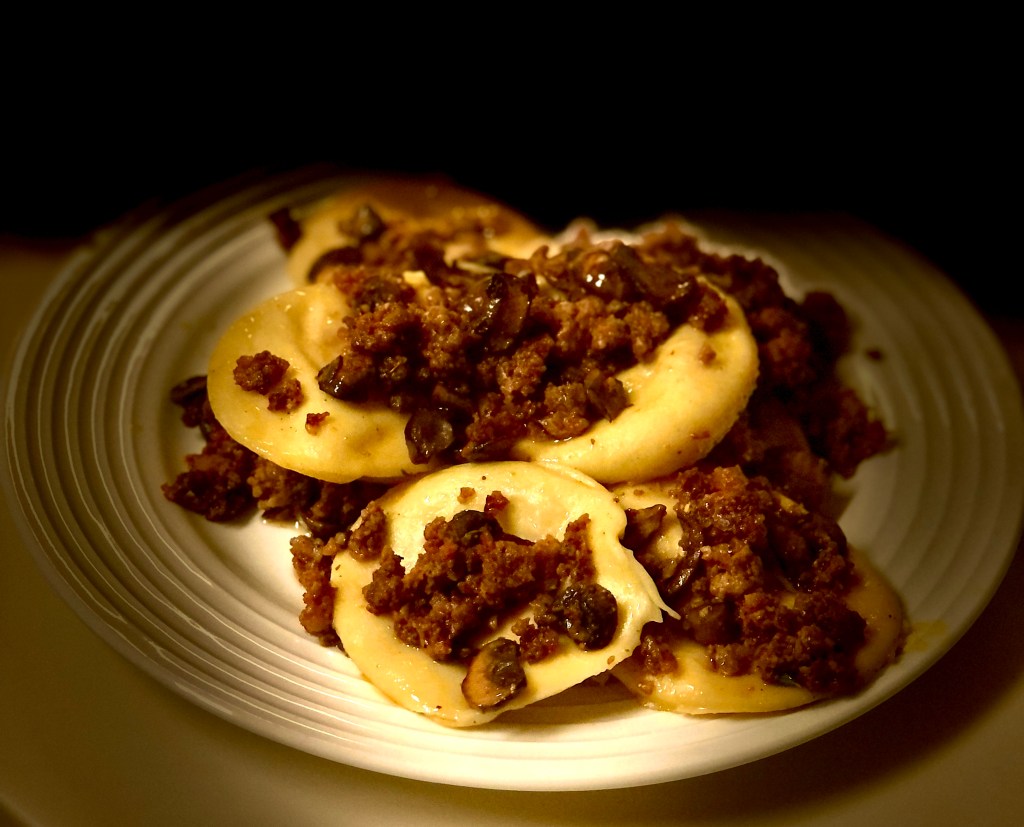
As you push through and make your little ravioli, you’ll have leftover trim pasta dough. Just repeat the process and push it through the pasta roller again. I ended up making approximately 16 ravioli. Aren’t they cute?
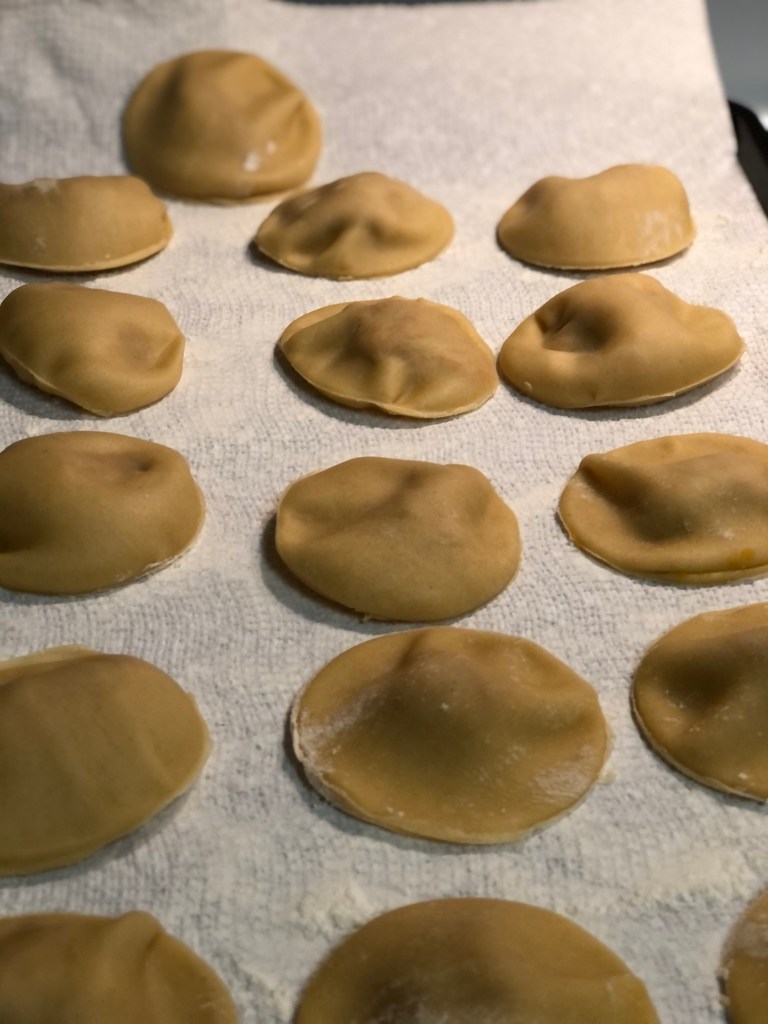
Place in boiling water for 30 seconds, strain and toss in toppings (or whatever sauce you prepared) and there you go! The tail end of this process is easy peasy and fast.
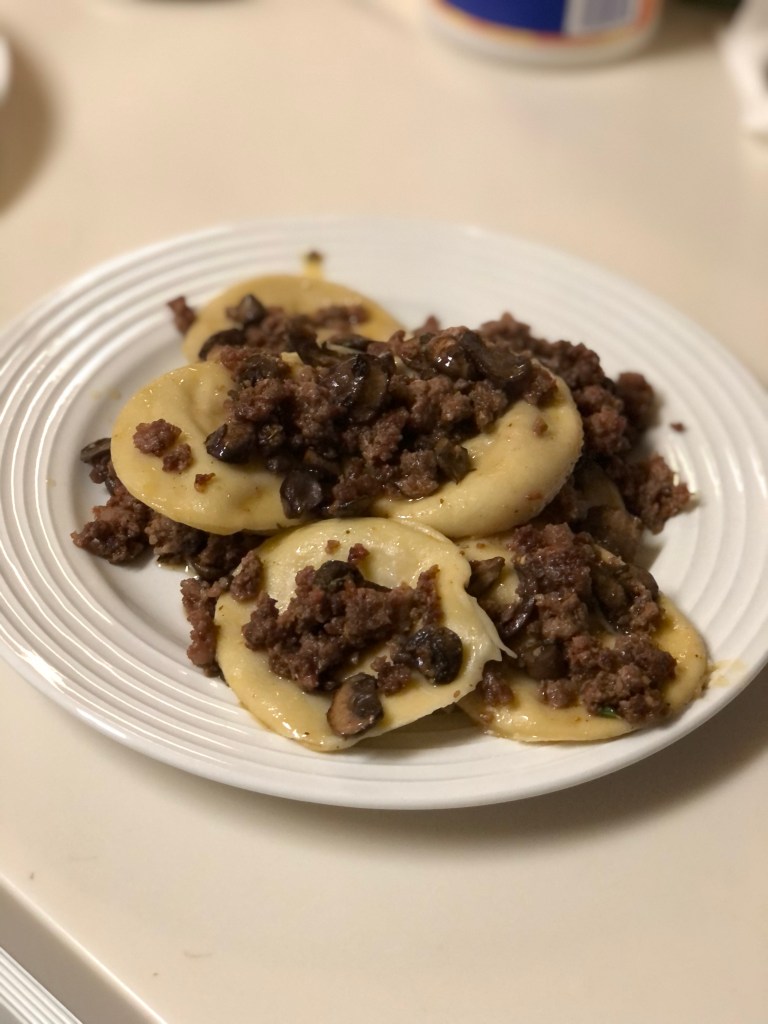
Taste test? YES.

The bouncy doughiness of the ravioli meshed so well with the velvety filling; the sweetness of the caramelized butternut was balanced out by the savory saltiness of the sausage and mushrooms. SO GOOD!

Do yourself a favor, and one weekend take the time to make the ravioli of your dreams. A heads up: it does take time so make sure you have the morning or afternoon to yourself for some healing and slow-max cooking. Allow yourself the time to enjoy the process: of getting dusty with flower, spreading your equipment all over the kitchen, taking up space, and letting your mind slowly re-center itself far, far away from stress and worries.

I wish you all the best, and talk to you soon ❤️🍁 Happy Fall.

Evelyne
Julia Child’s Boeuf Bourguignon

Dearest Readers,

Hello and welcome back into my kitchen for some cozy cooking 🙂 I’ve missed you! And hope you’ve all been well over the summer.

I recently found myself perusing a used bookstore looking for Christmas gifts and found a 1971 edition of Mastering the Art of French Cooking by Julia Child, Simone Beck, and Louisette Bertholle. It was a beautiful two-volume set and had all the vintage and pastel charm you’d expect. Merry Christmas… to me? So of course I bought it! And of course I made her famous boeuf bourguignon. And of course I had Julie & Julia flashbacks the whole time. Bon Appetite!

At first glance, this recipe seemed pretty straightforward. In true Julie Powell fashion, I dived straight in with unbridled optimism. For the occasion I decided to look for a good butcher in our area, and I did eventually find one in a small town about twenty minutes away that also sold wine. I came back that day with 3 LBS of quality lean stew meat and two bottles of Bordeaux. Below are some of the other ingredients that I used:

As you can see, there’s a big chunk of bacon; this is homemade bacon that my husband Alex cured and smoked, and it was such a great addition. Looking back, the one piece of advice I have (that Julia Child also had, I guess) is: don’t be afraid! You’ll be chucking things into boiling hot oil, and yes, it will spray everywhere. By the end of the recipe, I promise you won’t care anymore. You’ll be f e a r l e s s .

This recipe has plenty of steps and takes 4+ hours to complete. I recommend either making it the day before (it reheats really, really well) or making sure you have a good day ahead of you to prepare this. To start, cut your bacon into lardons or matchsticks. Boil them for ten minutes, remove, pat dry, and then briefly sauté in a dutch oven. Put the bacon to the side. Preheat your oven to 450 degrees!

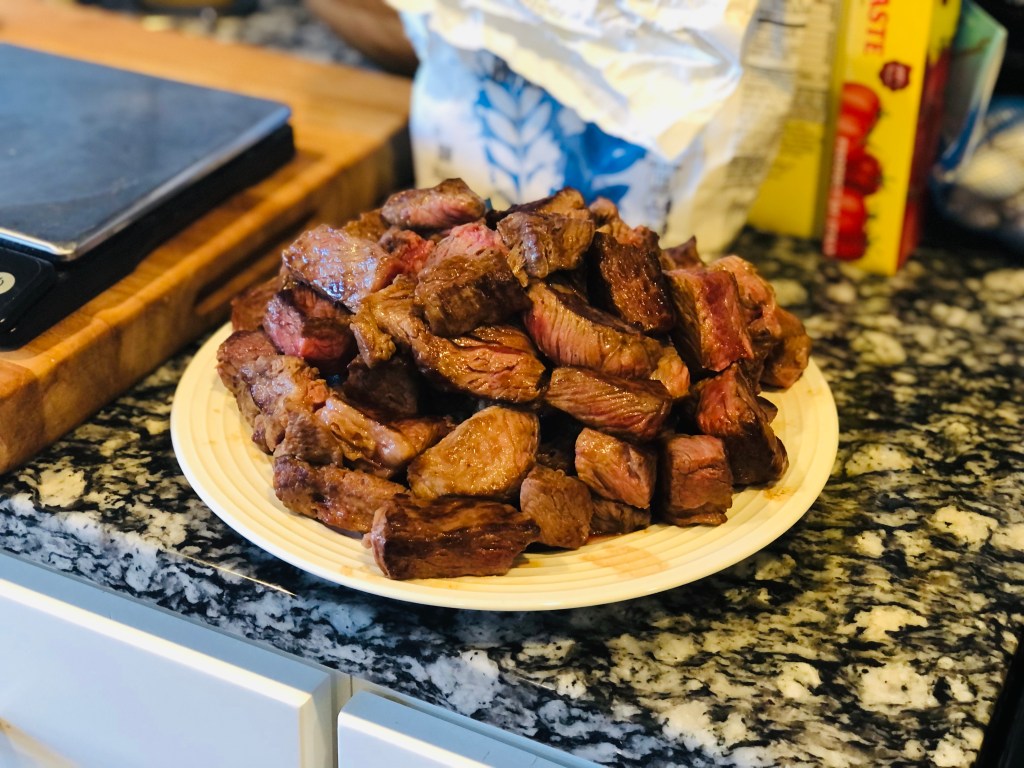
After that, brown your beef on all sides. Remember to keep the temperature medium-high, so the meat browns quickly. One you’re done, add it to the bacon on the side.

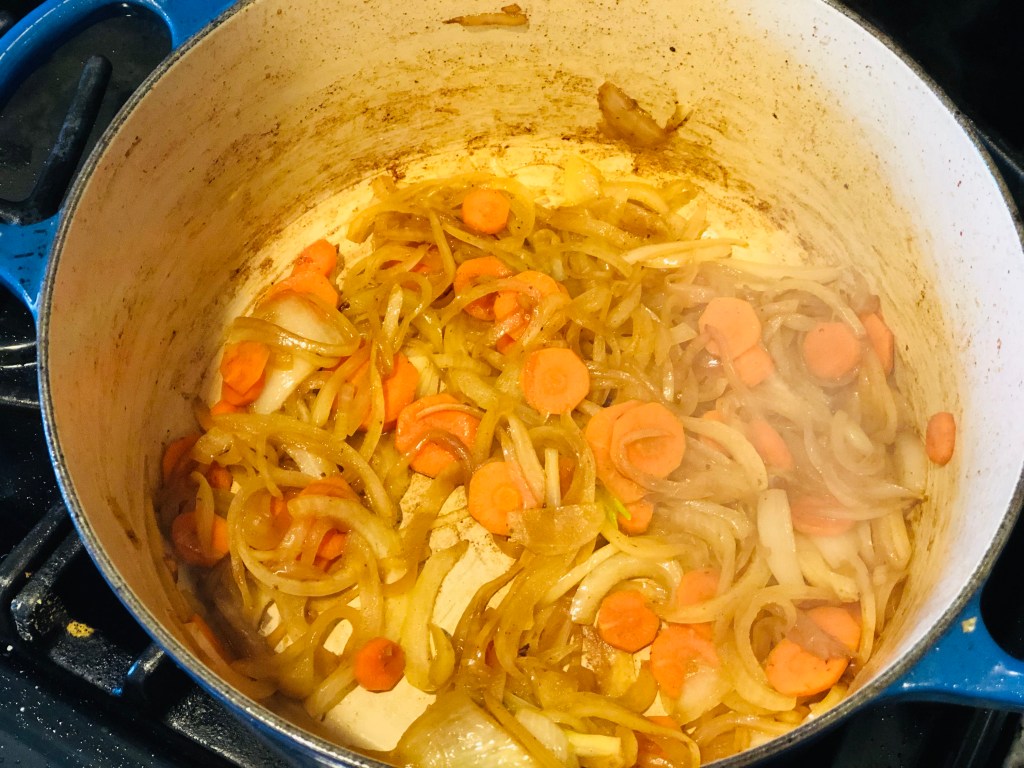
Yep, it’s a lot of meat. This recipe serves 4-6 people so it’s perfect for a special dinner with family or friends. Once the meat is browned, sauté some onion and carrots in that same fat. If you need to add some oil, go ahead and do so.

Once the vegetables are sufficiently browned, return the meat and bacon into the dutch oven. Sprinkle in some seasoning (salt, pepper) and some flour, and then toss gently. To get a little delicious crust around the contents, place in the oven for 4 minutes, toss gently again, and put back in oven for another 4 minutes. Remove dutch oven and lower the temperature.

Now for the fun part! Add a whole bottle of full bodied red wine (it can be a Beaujolais, Bordeaux or Burgundy), and top that off with with some beef stock until the beef is covered. Throw in some tomato paste, garlic, thyme, and bay leaf, stir, and put back in oven for 3-4 hours.

In the meantime, you’re going to prepare 1 LB of mushrooms and 20~ small white onions.

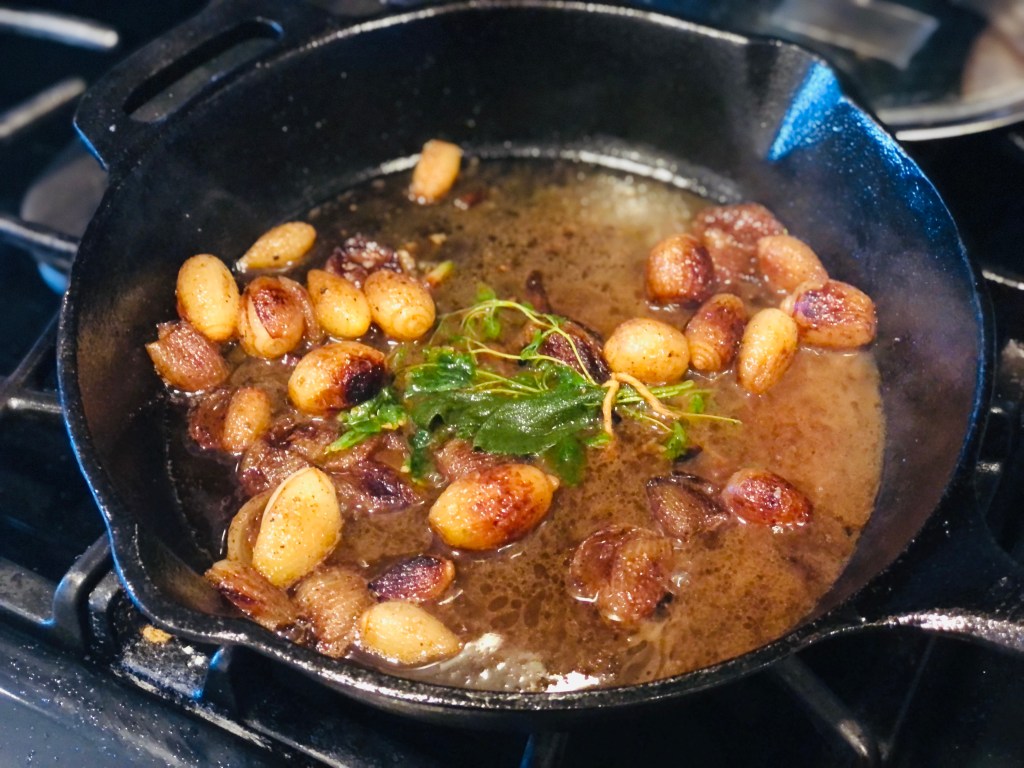
I recommend starting with the onions. While the recipe mentions an enameled skillet, you can also do this in a cast iron. Add butter and oil to the pan, let that heat up well, and then toss in the white onions. Roll them around for 10 minutes, until they get brown on all sides. At this point, pour in some stock and add an herb bouquet (parsley, sage, thyme), cover, and let simmer for an hour at low heat. The result is delightfully sweet, caramelized onions that you will tempted to eat… like me 🙂 I ended up sneaking a few.

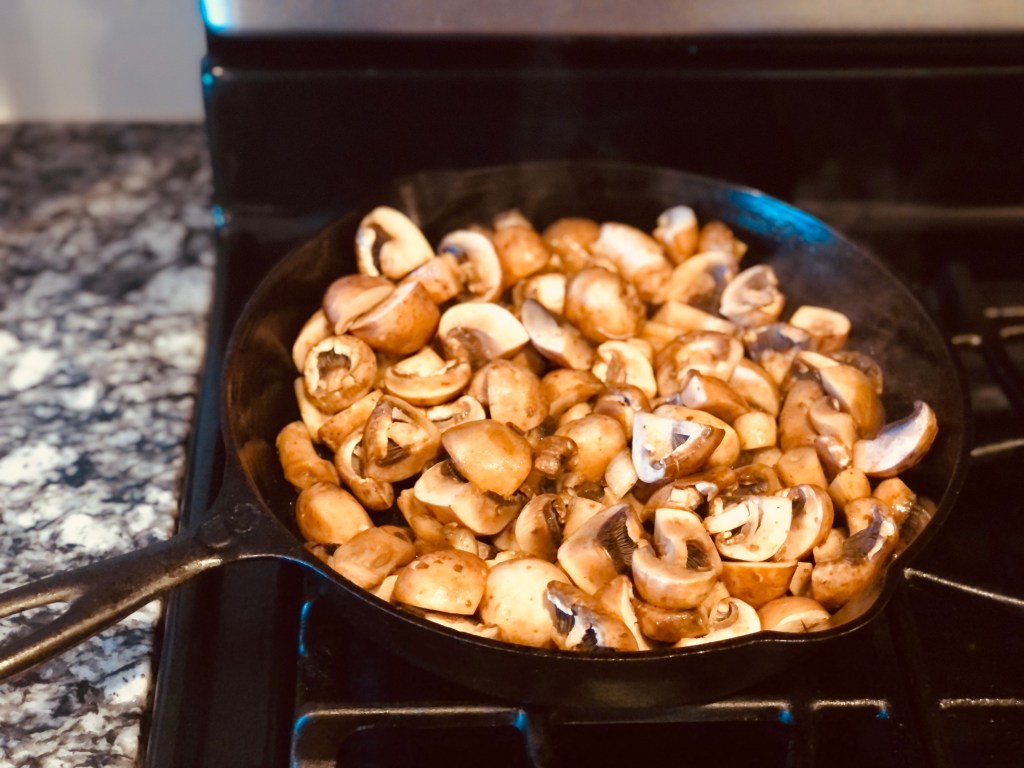
While the onions cook, start the mushrooms. In a cast iron, add butter and oil, and toss your mushrooms until they release all their moisture and start to brown.

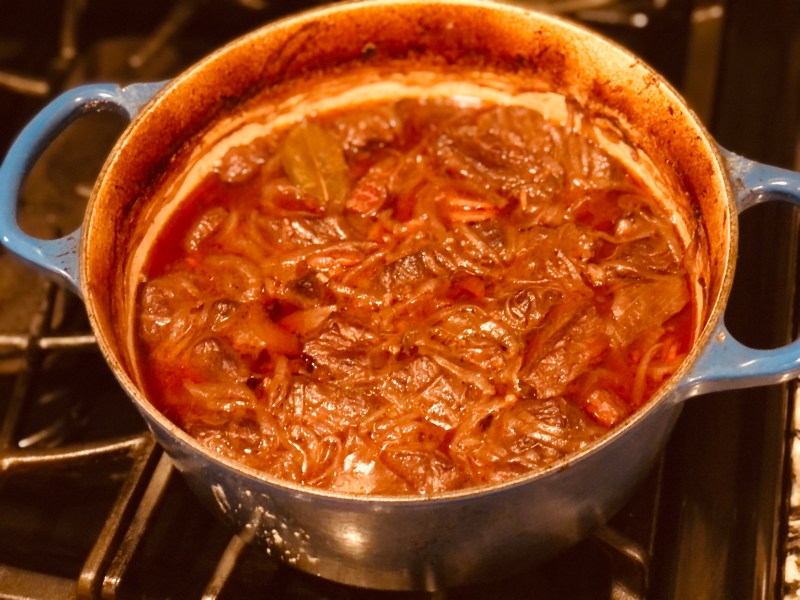
Once the meat is done, pour the contents through a sieve over a saucepan. I separated the meat (which I put back into the dutch oven with the mushrooms and onions) from the sauces.

I let the sauce simmer a little bit, while skimming off the fat.

That looks so delicious! At this point, taste for seasoning and then pour over meat and vegetables.

And there you have it, 4 hours later!

You can serve this with egg noodles, potatoes or rice. It ended up tasting rich, warm, dense, and opulent and was very much appreciated by our friends (who went back for seconds). I’m glad I got to test the famous Beef Bourguignon! It’s also the perfect dish for a cold night in November, and can be great for meal prep as well. My final thoughts on it are that next time I’ll probably opt for some short cuts and use a crock pot, because it was truly a laborious dish.

Well dear friends, I hope you have a fulfilling and delicious weekend ahead! Till next time.

Treat Yourself to a Salmon Fillet Dinner

Hello Dearest Readers,

Welcome back to my little cooking corner. Today, I’d like you to join me for a healthy recipe I found in Cook’s Illustrated, Sep & Oct 2022: Salmon Fillets with Ginger & Cider Glaze.

While salmon isn’t the first thing that comes to mind for the Fall, it’s such a great way to enrich our diets and provide us with Omega 3 fatty acids. These help with heart and artery health, and lower inflammation in the body, keeping us happy and healthy during the colder seasons (Cleveland Clinic).

I’ve always had a love/hate relationship with salmon if I’m being honest. The biggest problem for me was I could never find a way to make salmon appetizing- I would make it for health reasons, but I never could quite make it as yummy as mom would!

*Shout out to my mom, Rita, who is incredible*

So I’m thrilled to say this recipe really changed the game for me. I learned a lot, too. If you’ve found yourself in a similar predicament, this can help.

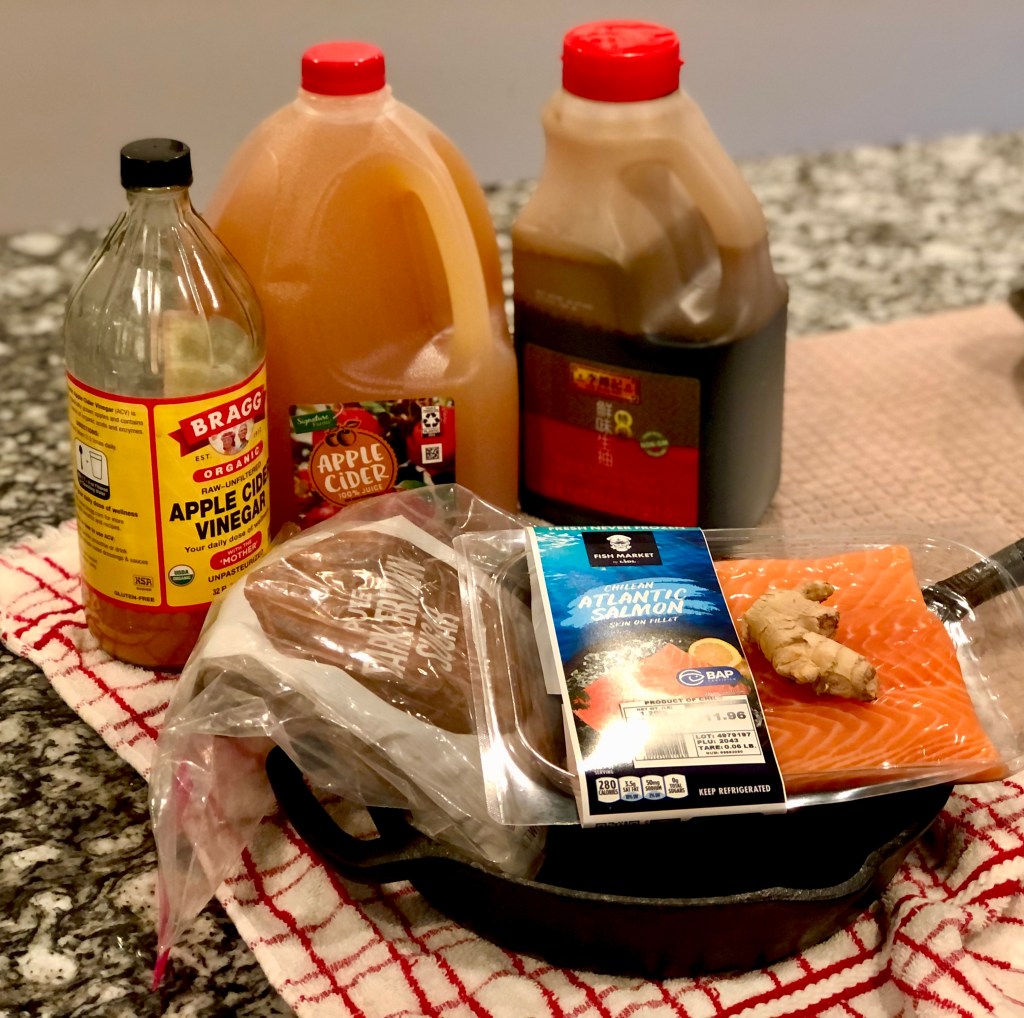
To start with, here are the ingredients some of which are collected in an iron skillet.

For best results, choose a middle cut that you can divide into 2 or 3 pieces. Once you cut the salmon in appropriate portions, you will proceed to place those pieces in a brine. This is the first thing I learned, and I’m excited to share it! First of all, what does a brine consist of? In our case, it’s some table salt and sugar dissolved in water. The salmon is then placed in the brine for 15 minutes. This makes such a difference in tenderness.

While the salmon sits in the brine, you can move on to making the glaze. Oh! And don’t forget to turn on your oven at 300 degrees.

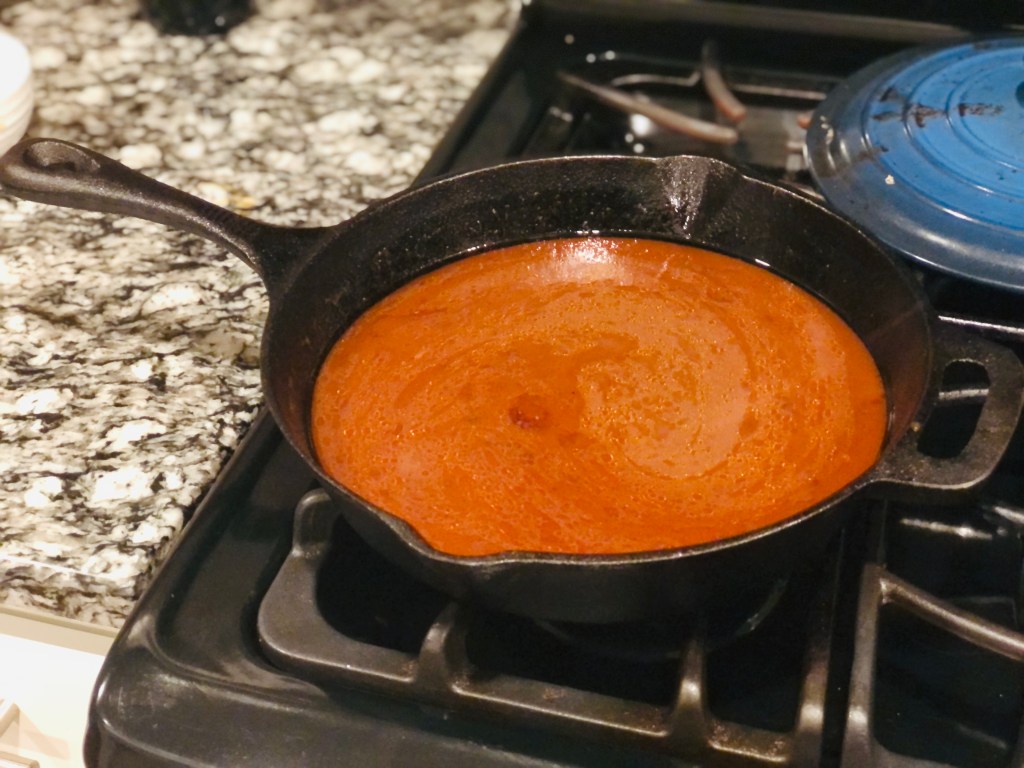
For the glaze, I used apple cider, apple cider vinegar, soy sauce and ginger as my flavors and added cornstarch for thickness. If you have all the ingredients available on your counter space, this takes about 5 minutes including cooking time.

Please, please, please pat your salmon dry after removing from brine. You want to avoid moisture when you place those fillets on a heated and greased cast iron skillet (or any oven safe pan). Let your fillets brown on both sides and brush with some glaze.

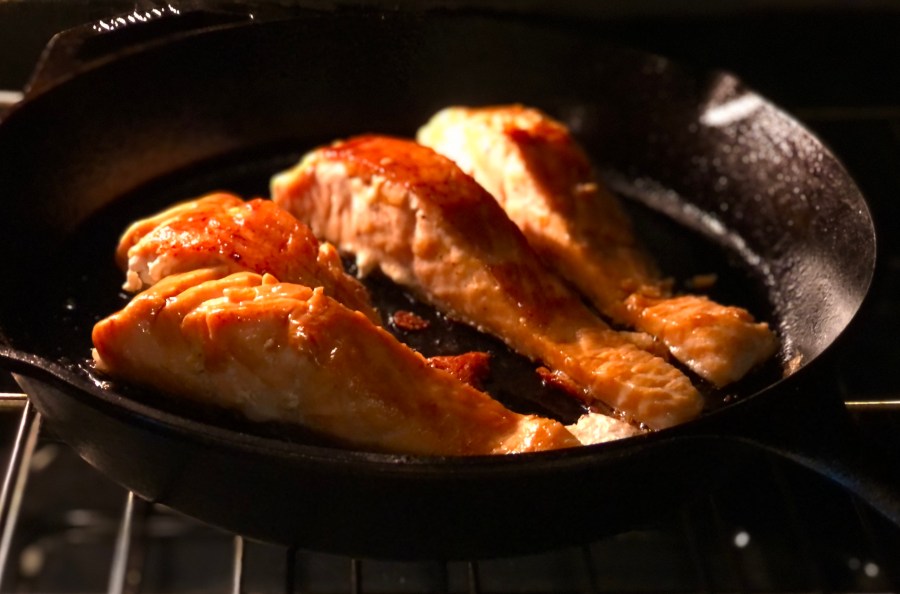
Once that’s done, go ahead and take the skillet and move it to the oven and let bake for 10-15 minutes or until internal temperature is 125+ degrees.

Just look at ’em- those delicious little fillets.

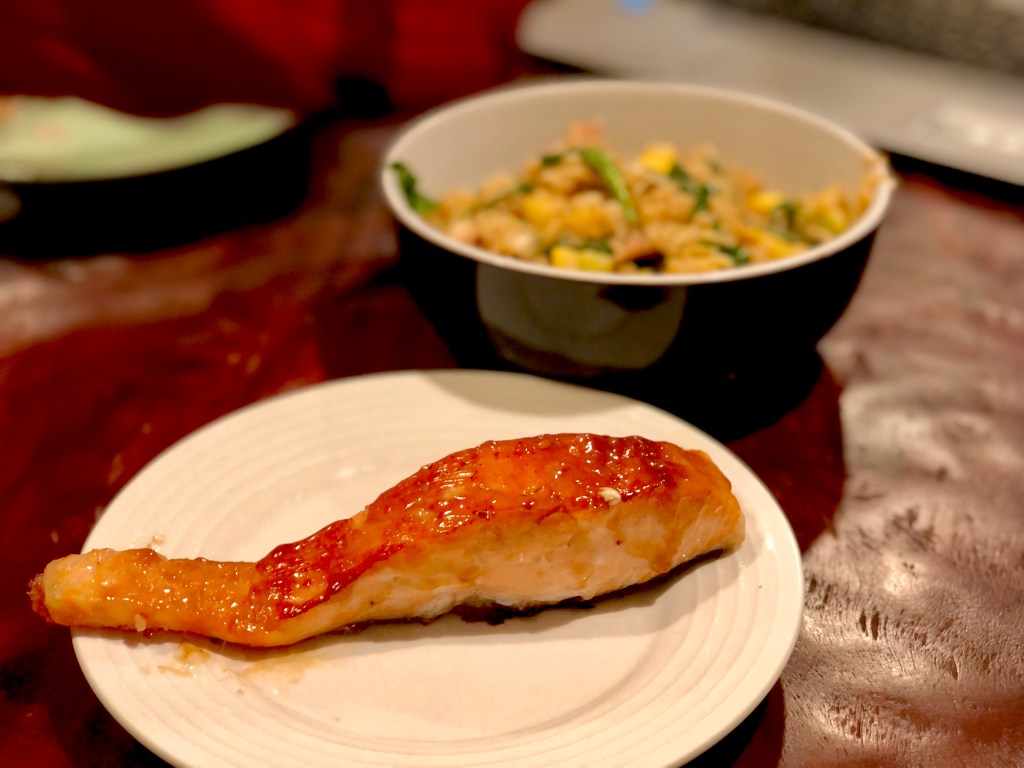
When the fillets are done, go ahead and brush the remaining glaze on top. Plate with whatever side you prefer- me, I like rice and any kind of greens (and maybe kimchi).

Well friends, it was lovely to see you and glad you stopped by. I hope this experience could shed some light on preparing salmon in a delicious and easy way.

Have a lovely week ahead with delicious meals and with many happy moments. Till next time!

Evy

The Journey Begins: Maple Soy Duck Breast

Hello, dearest readers.

I recently decided to start working through, and reviewing, the many cookbooks I have.
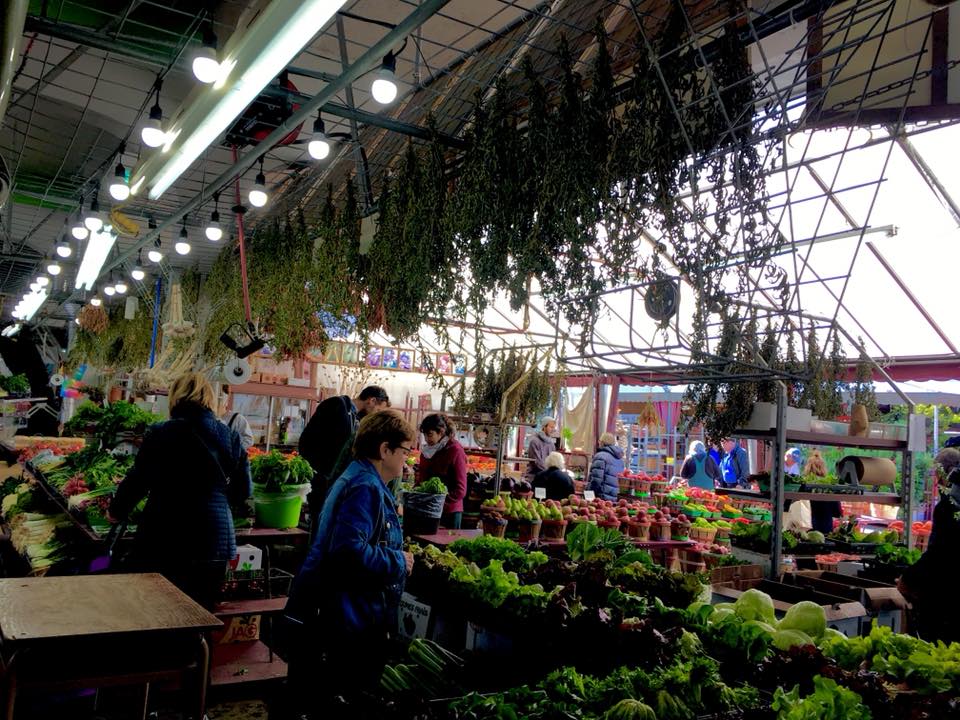
The first book I’m going with is Market Chronicles: Stories and Recipes from Montréal’s Marché Jean Talon, by Susan Semenak. I bought it in the market’s bookstore– yep, they have a bookstore– when I visited Montréal, Canada, in 2018.

To give you an idea of how remarkable this open-air marketplace is, here is how Semenak describes it:

“Ever since the market’s beginnings in the early 1930’s, waves of immigrants to Montréal from Italy, Ireland, Poland and Ukraine, then Portugal and Greece, Morocco and Tunisia, El Salvador, Vietnam, Mexico, Lebanon, and Haiti — and countless points in between– have come here to find inexpensive fruits and vegetables. This is where the city’s Italians come for their carloads of of plum tomatoes when it’s time to ‘make the sauce’ and where Muslims from Tunisia, Algeria and Morocco gravitate on Ramadan evening in search of sweet, sticky chebakia to break the fast. Mexicans hankering for authentic barbacoa follow their noses to Javier Muñoz taqueria on Saturday mornings, when the smell of spiced lamb barbecued in clay-lined pits fills the air. Around the market’s perimeter, Italian bakers and grocers, Latino butchers, and hole-in-the-wall tonkinoise soup and shish taouk joints lend their world beat to the vibe.”

The cookbook is organized by seasons, and for each season there are highlighted produce and recipes. Oh, how I love it!

I dived straight in, not realizing that it starts with Spring (so not aligned with the current season). But that’s okay! I will skip to Summer next post and get back on track. In the meantime, let’s roll with what we have.
The first ingredient of Spring is *drumroll* — Maple Syrup.

One of the uses suggested for this ingredient was Maple Soy Duck Breast (on a bed of sautéed ginger and scallions). Very fancy.
Now, the reason why I got so excited is my fiancé, Alex, loves duck and usually only gets it when we eat out. I wanted to surprise him.

Duck breast tends to be hard to find and quite expensive honestly. Luckily, I found some at Wegman’s for about sixteen dollars for a pound-and-a-half. Needless to say, I opted for only one breast.

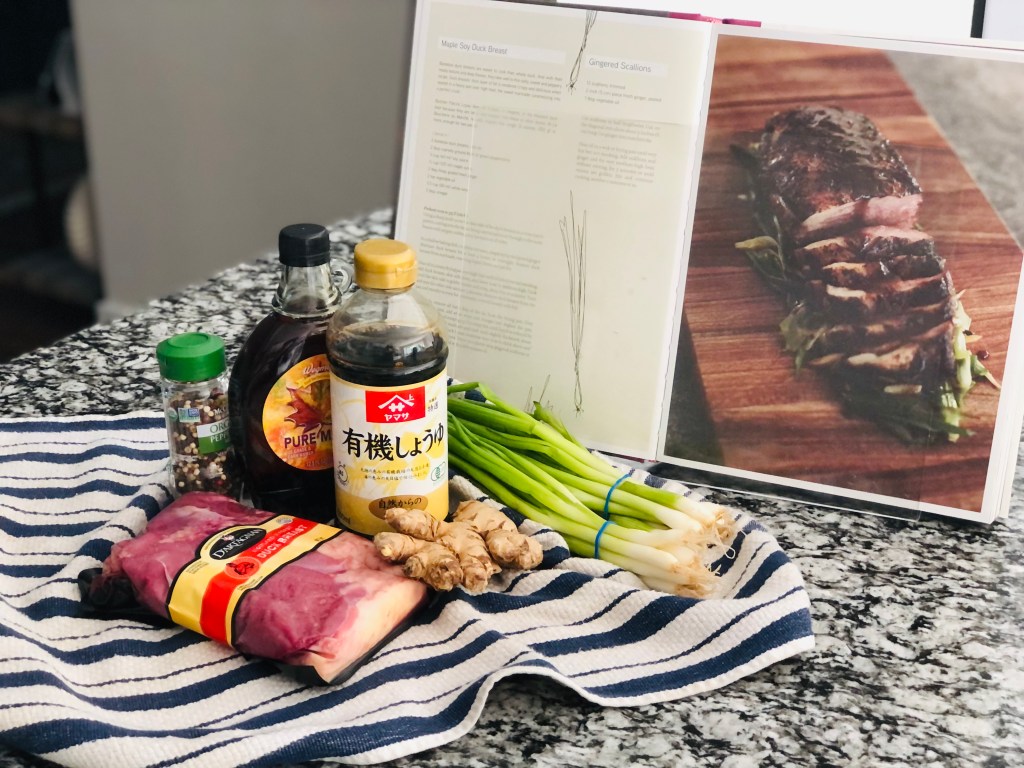
These are the major ingredients I used for this dish:


The maple syrup is used alongside soy sauce and ginger to create a marinade for the duck breast, which is scored (fat side only) and coated with a peppercorn rub beforehand. Once placed in the marinade, it is refrigerated for at least 4 hours. Easy day.

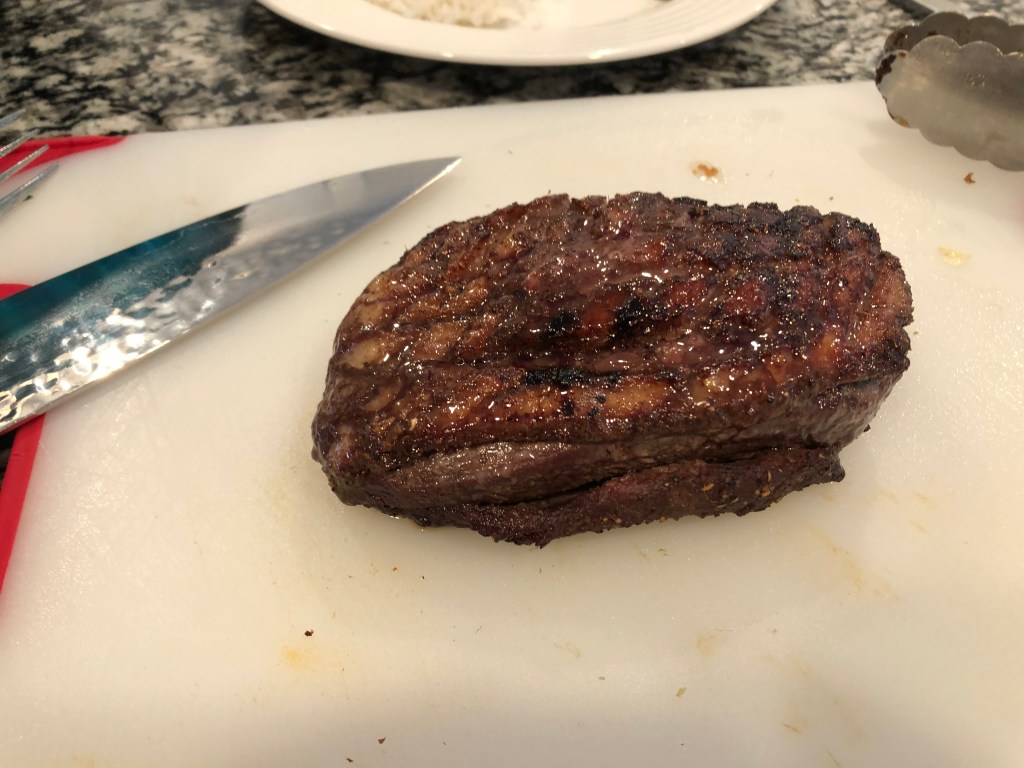
After 4 hours or so, you want to remove the duck breast from the marinade and pan-fry it. The outside becomes brown and crispy.

Once this was achieved, I removed the duck breast from the stovetop and placed into the oven for about half an hour, or until the internal temperature hit 170 degrees.

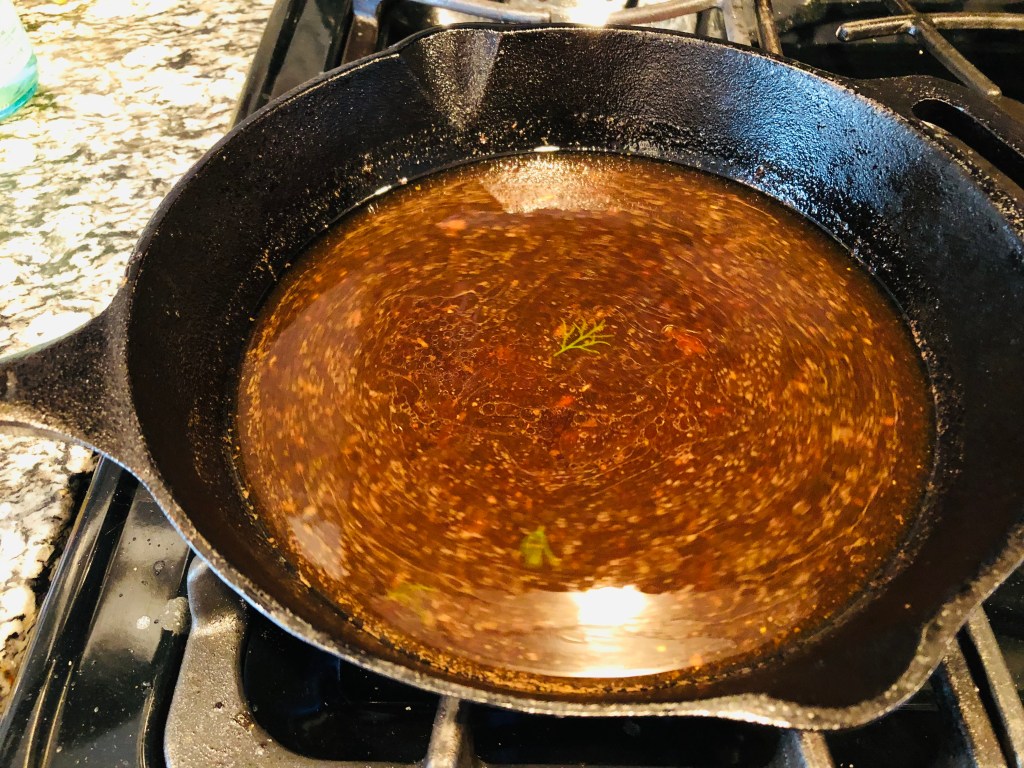
Luckily, I didn’t throw out the frying oil! Some of it is set aside and used to make a finishing glaze. I did this by adding it to the remaining marinade liquid, along with a touch of vinegar, and white wine. No need for additional salt as there is a lot of soy sauce.

The glaze then needs to be reduced for approximately 15 minutes, or until it becomes thick and syrupy.

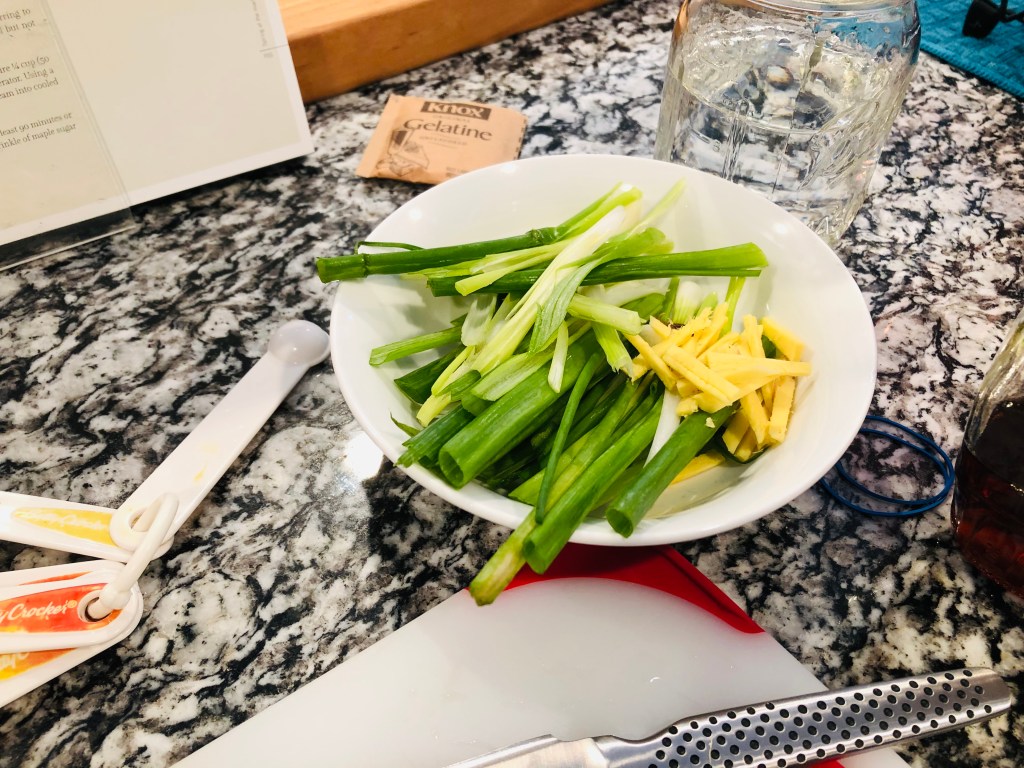
While the duck was in the oven, I sautéed the ginger and scallions and built our side salad.

And voilà, after about half an hour, the duck was looking pretty great.

I sliced the duck and laid it atop a bed of scallions and ginger. Then, I added the glaze. The sides were rice and salad. Here is the final result!

The salad is not represented as it didn’t fit on the plate. We were also too hungry to patiently and thoughtfully build a montage of dishes.

Now for the review.

Turns out, I don’t like duck. Womp, womp.
That’s not the recipe’s fault, though! I just don’t like the taste of duck meat. That being said, the meal was a solid win– Alex loved it! The slightly crispy scallions and ginger paired beautifully with the glaze, and emphasized the main flavor notes of the dish. The soy sauce and maple syrup danced together in making a sweet, delicious umami, which slowly ran through the rice. It was very tasty.

Now, here is what I have to say about the recipe itself.
I think the flavors highlighted are pretty amazing, and objectively pair well with duck. The quantities listed are accurate and go well together. One could also say, they “pan” out — badum tss.

It’s okay. I’ll let myself out.

Jokes aside, the recipe works well flavor-wise and quantity-wise.
The only criticism I have is in regards to times and temperatures. The recommended time and temperature for the duck to stay in the oven was 8-10 minutes at 325 degrees. Wrong.

I would replace that with at least 20-25 minutes at 350 degrees. The ducks internal temperature needs to be at 170 degrees, and breast meat tends to be pretty thick and isolated with a layer of fat.

That being said, I thoroughly enjoyed making this. I enjoyed the process of going grocery shopping and preparing the meat, and learning that duck meat wasn’t for me. This really surprised me, by the way!

Well, dear readers, I hope you enjoyed reading this. I’ll see you next time with an appropriately themed summer dish! Much love, Evelyne.